12 AI Video Studios Actually Shipping Work (And Why Most Won’t Survive)

AI video studios have exploded — but only a small group are shipping work that holds up under real-world pressure (deadlines, approvals, cutdowns, brand rules).
The winners aren’t the ones screaming “AI-first.” They’re the ones with direction, hybrid capability, and a production system that stops drift. Here are 12 studios doing it properly — and what they reveal about where the market is heading.
AI video production went from “cute experiment” to “send it to the client” faster than anyone expected. In the last 18 months, we’ve watched the space flood with new studios, new reels, and new claims.
And here’s the uncomfortable truth: making a decent-looking clip is now easy. Shipping a commercial that survives revision rounds, keeps continuity, and performs in market is still rare.
How we judged these studios (so this isn’t just a list)
We’re not ranking tool stacks. We’re ranking shipping ability:
Direction: Is there a clear idea and point of view — or just “AI vibes”?
Continuity: Do scenes match across a spot and across versions?
Finish: Does it hold up like proper advertising (edit, grade, sound, pacing)?
Reality: Can they handle approvals, stakeholders, deadlines, and changes without falling apart?
This is based on publicly visible work, showreels, and positioning as of Feb 2026.
1) The AI-Native Film Studios (Original Content + Brand Work)
1. Primordial Soup — Darren Aronofsky’s AI storytelling studio
What they are:
AI-focused storytelling studio founded by a serious filmmaker.
Why they matter:
They’re treating AI like a new filmmaking layer, not a novelty filter.
Signal:
When directors with proper pedigree move in, the “AI = gimmick” era ends.
2. Secret Level — AI-native entertainment for brands and IP
What they are:
Entertainment studio building films/series/worlds with AI-first production.
Why they matter:
Their output reads like entertainment, not “tech demo content.”
Signal:
The winning play is “studio that uses AI,” not “AI company that makes videos.”
3. Wonder Studios — Investor-shaped studio structure
What they are:
AI-native studio presenting like a traditional production company.
Why they matter:
The vibe is “built to run,” not “built to trend.”
Signal:
Money is moving toward production infrastructure — not just the tools.
2) The Hybrid Studios (AI + Traditional Production)
4. Asteria Film Co. — Hybrid, not dogmatic
What they are:
A pragmatic blend of AI + traditional craft.
Why they matter:
They choose methods per shot, not per ideology.
Signal:
The future is hybrid. Dogma loses. Decision-making wins.
5. Scary Robots — Agency-first, AI inside the engine
What they are:
London creative shop using AI as workflow, not brand identity.
Why they matter:
They’re selling outcomes and creative partnership, not tool access.
Signal:
The smartest agencies won’t rebrand as “AI.” They’ll just quietly get faster.
3) The “AI Production Company” Hedge (Speed + Human Reassurance)
6. Silverside AI — “Human creativity” as the safety rail
What they are:
AI-driven production with a strong human-direction message.
Why they matter:
They understand client fear: “will this be embarrassing?”
Signal:
Taste is the real scarcity. Everyone’s trying to borrow trust.
7. AiCandy — Fully AI-powered positioning (high risk / high reward)
What they are:
Hard “fully AI” stance, loud differentiation.
Why they matter:
If they keep quality high, they can own a lane. If not, they’ll look like 2024 energy.
Signal:
“AI-native” alone won’t be a moat for long. Output has to carry it.
8. The Dor Brothers — Commercial polish, minimal gimmick
What they are:
AI video studio with genuinely professional-looking work.
Why they matter:
They’re not over-explaining the AI — they’re letting the work speak.
Signal:
You can say “AI studio” if the finish is good enough that nobody cares how.
4) The Content-at-Scale Players (Always-On Production)
9. GNR8 Studio — Volume, formats, consistency
What they are:
AI-native content production across campaigns and variations.
Why they matter:
They solve the “60 versions by Friday” brief without collapsing.
Signal:
There’s a huge market for always-on production that traditional crews can’t service economically.
10. Craete — “Days, not months” as the product
What they are:
Fast commercial output for brands that need momentum.
Why they matter:
They’ve productised speed — which is a real wedge.
Signal:
Speed gets you in the door. Quality keeps you there.
5) The Enterprise + Training Angle (Systems, Not Just Spots)
11. Visualoop — Enterprise-ready positioning
What they are:
AI-native agency selling output and operational capability.
Why they matter:
Enterprises don’t just want videos — they want governance, repeatability, and internal enablement.
Signal:
Training + workflow systems is becoming a serious revenue lane.
12. Pixel Juice — Director-led commercials that don’t drift
What we are:
Director-led studio in Sydney, using AI like any other production tool: to execute ideas faster without sacrificing craft.
What we’re actually doing:
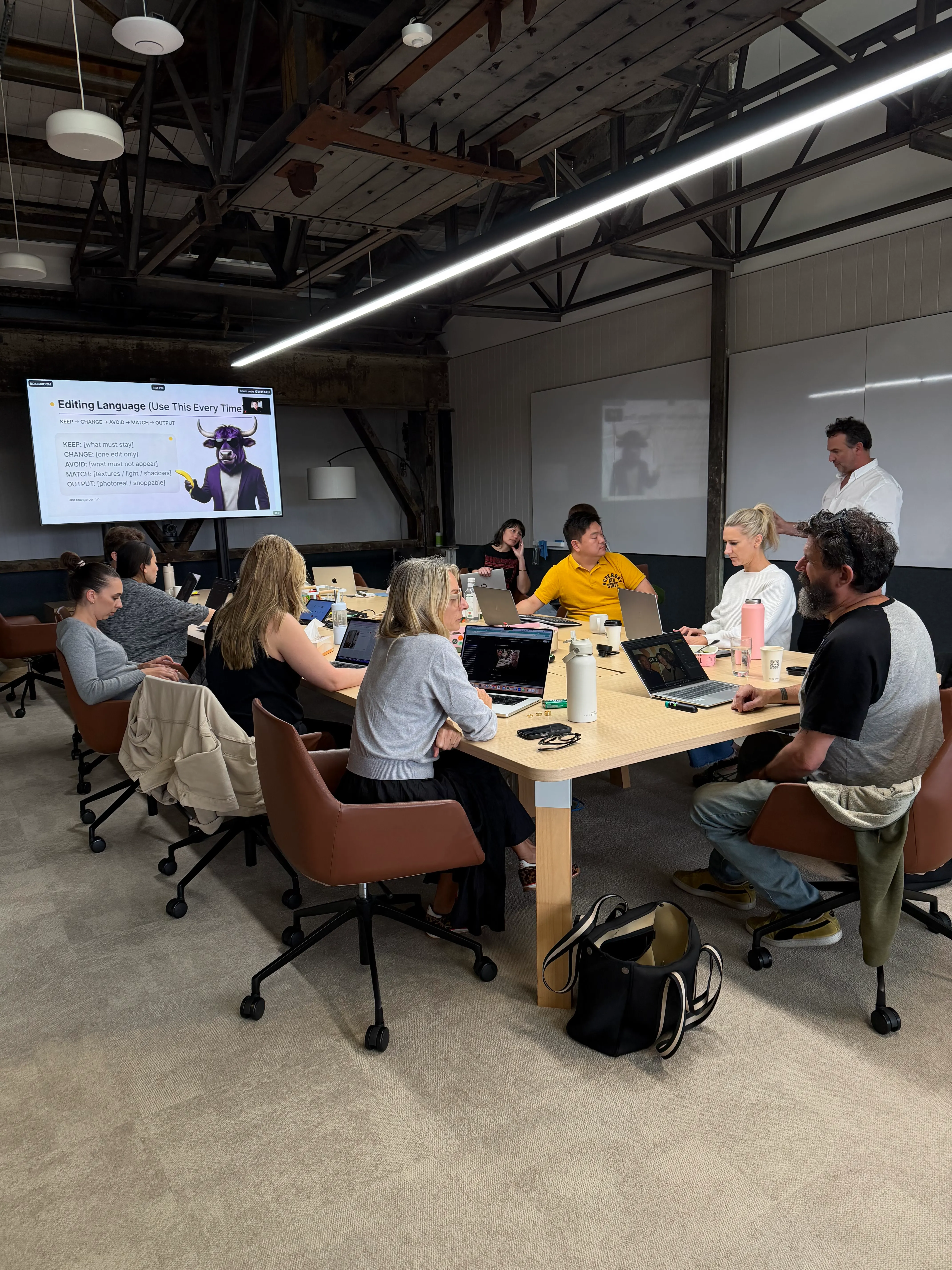
Shipping commercials, brand films, and high-volume cutdowns — plus training teams to use AI without producing slop.
The positioning play:
“We’ll make it for you — or we’ll build the system so your team can ship without embarrassing the brand.”
Why that matters:
The market is splitting. Brands either (a) outsource premium work, or (b) build internal capability. Pixel Juice can do both — which means we don’t lose when the pendulum swings.
If you’ve ever heard “make it more premium” from a stakeholder who can’t define premium… that’s literally our home turf.
What these studios tell us about where this is going
Pattern 1: Nobody wants to be an “AI company” anymore
Everyone’s framing AI as method, not identity. Because clients don’t buy AI. They buy outcomes — attention, conversion, recall, clarity.
Pattern 2: The “human creativity” disclaimer is everywhere
Even the most AI-forward shops still lead with people, not prompts. That’s not a coincidence. It’s a signal: the market still wants human judgment attached to machine output.
Pattern 3: Speed matters — but only if the finish holds
Everybody promises “days, not months.” Fair enough. But when the finish slips, speed becomes a liability. Clients remember how it looked, not how quickly it was made.
What Pixel Juice believes (Even When Generation Is Easy)
You press Generate.
Boom. Pretty image. Decent video. Something vaguely impressive.
And for about six seconds, you feel like Spielberg with Wi-Fi.
Then you post it.
And nothing happens.
No bite. No soul. No sales. Just a gentle cough from the algorithm and a slow fade into oblivion.
Here’s the truth we’ve learned the hard way at Pixel Juice:
AI makes output easy. Taste is still hard.
And taste still needs people.
AI video generation tools (Runway, Kling, Veo) are making “cinematic” output cheap. The differentiator now is creative direction: constraints, pacing, restraint, and brutal curation. That’s what turns AI video production into advertising that actually works.
The thing clients say right before the wheels come off
We hear it a lot:
“It’s AI. Can’t we just generate something amazing?”
Sure. You can generate something.
But “amazing” isn’t a setting. It’s a result of choices. Hundreds of them.
Framing. Rhythm. What you reveal. What you hide. What you refuse to show. What you cut. What you hold on. What you let breathe.
At Pixel Juice, the job isn’t “use AI.”
The job is to direct AI like it’s a production team—because that’s what it is now: a very fast, very literal crew that will happily give you exactly what you asked for… even when what you asked for is terrible.
Why most AI video content feels generic
Right now we’re in the new-toy era. People are still impressed by:
motion that didn’t require a camera
voices that didn’t require a booth
visuals that didn’t require a designer
So raw generations still get attention.
But that window is shrinking fast.
People’s AI radar is improving, not because they’re smarter—because they’re exposed to more of it. Their brain starts spotting the patterns:
same lighting, same timing, same glossy nothing.
And they scroll.
Most AI content feels like a demo for one reason:
people do the same three steps.
Type a vague prompt
Accept the first output
Post it like it’s finished
That’s not creation. That’s pulling the lever on a slot machine.
AI is trained on the average of everything it’s seen, so your “cinematic brand film” becomes generic moody footage with no point. And if you publish the first take, you’re basically announcing:
“This is my taste.”
Dangerous sentence.
Where AI video still falls apart (and why direction matters)
Yes, AI video can look real now. But it still breaks in predictable places—especially in paid media where people are already suspicious.
The weak joints:
Lip sync + dialogue performance: micro-timing, mouth shapes, teeth/tongue detail. “Haunted” arrives instantly.
Faces and continuity: the same person drifting shot-to-shot. Subtle morphing is a trust killer.
Crowds / too many humans: background faces melt, hands multiply, extras “evolve.”
Hands doing precise tasks: pouring, applying product, opening packaging, typing—fine motor actions expose “almost physics.”
Text in the world: packaging labels, signage, UI screens. Warps, jitters, changes language, becomes “almost-right.”
Complex physics: fabric tension, liquid behaviour, collisions, contact shadows.
A director doesn’t ignore these problems.
A director designs around them. Chooses the right approach per shot: real, AI, or hybrid—based on what the audience will actually feel.
What professional directors do differently with AI
This is the part you only learn after you’ve made a hundred things and thrown ninety of them in the bin.
AI isn’t magic. It’s context-sensitive. The best results come from people who:
know what references actually mean (not just “cinematic”)
can describe camera language and pacing like a director, not a marketer
understand restraint (what not to generate is a superpower)
can iterate without losing the core idea
can curate brutally without getting emotionally attached to “cool”
Same tool. Totally different output.
Not because they have “better prompts.”
Because they have better judgement.
A Pixel Juice moment (this happens weekly)
Client sends a brief:
“We want something futuristic. Premium. Viral.”
Cool. That’s not a brief. That’s a mood board that drank three energy drinks.
So we ask one question that actually matters:
What should the audience feel in the first two seconds?
Because once you answer that, everything changes:
the camera language changes
the edit becomes a decision, not a collage
the sound design gets a job
the reveal strategy becomes intentional
the whole piece stops being “content” and starts being communication
That’s direction. That’s what turns AI from a generator into a weapon.
The hard truth about AI and creative direction
AI won’t replace directors, creatives, or production professionals.
It will replace:
template merchants
people who can’t choose
As AI gets better, taste becomes the bottleneck. And taste is learned. Practised.
Often paid for with embarrassment.
And no, this isn’t a dunk on juniors. Everyone starts somewhere. But if your brand hands AI to someone without direction skills, you’ll get:
impressive-looking work that says nothing
output that feels hollow
content that blends into every other shiny AI post
That’s how brands become generic—fast.
Pixel Juice doesn’t sell “AI content.”
We sell directed content made with AI. Big difference.
What professional direction actually looks like (in practice)
Professionals don’t “press Generate.” They:
Set constraints: brand rules, visual language, no-go zones
Build a sequence: what happens, in what order, and why
Curate brutally: most outputs die before anyone sees them
Polish like it matters: edit, grade, sound, comp, QC
Know when to stop: overcooking is real
AI becomes an amplifier.
Not the idea.
A quick checklist: directing AI video like a pro
If you want your AI video production to stop looking like everyone else’s:
Before you generate anything:
Write the one sentence the piece must land (not the vibe—the message)
Decide the first two seconds (feeling + action + visual hook)
Lock references + constraints (palette, camera language, composition rules)
Generate 10, kill 7 immediately, refine 2, ship 1
If it’s “cool” but unclear, it’s dead
If it’s “perfect” but sterile, dirty it up on purpose
Clarity beats spectacle now. Every time.
Why this matters more as tools get better
The better the tools get, the more important direction becomes.
Because when everyone has access to the same AI video generators—Runway, Kling, Veo, whatever comes next—taste is the only differentiator. The brands that win won’t be the ones generating the most content.
They’ll be the ones who can look at infinite options and say:
“That one. That one has a pulse.”
That’s not a tool decision.
That’s a director decision.
The takeaway
AI removes the annoying parts of production: permits, crew schedules, weather delays, some VFX pain, some budget fights.
But it doesn’t remove the hardest part:
Deciding what matters.
And that’s why directors and creative professionals matter more now, not less.
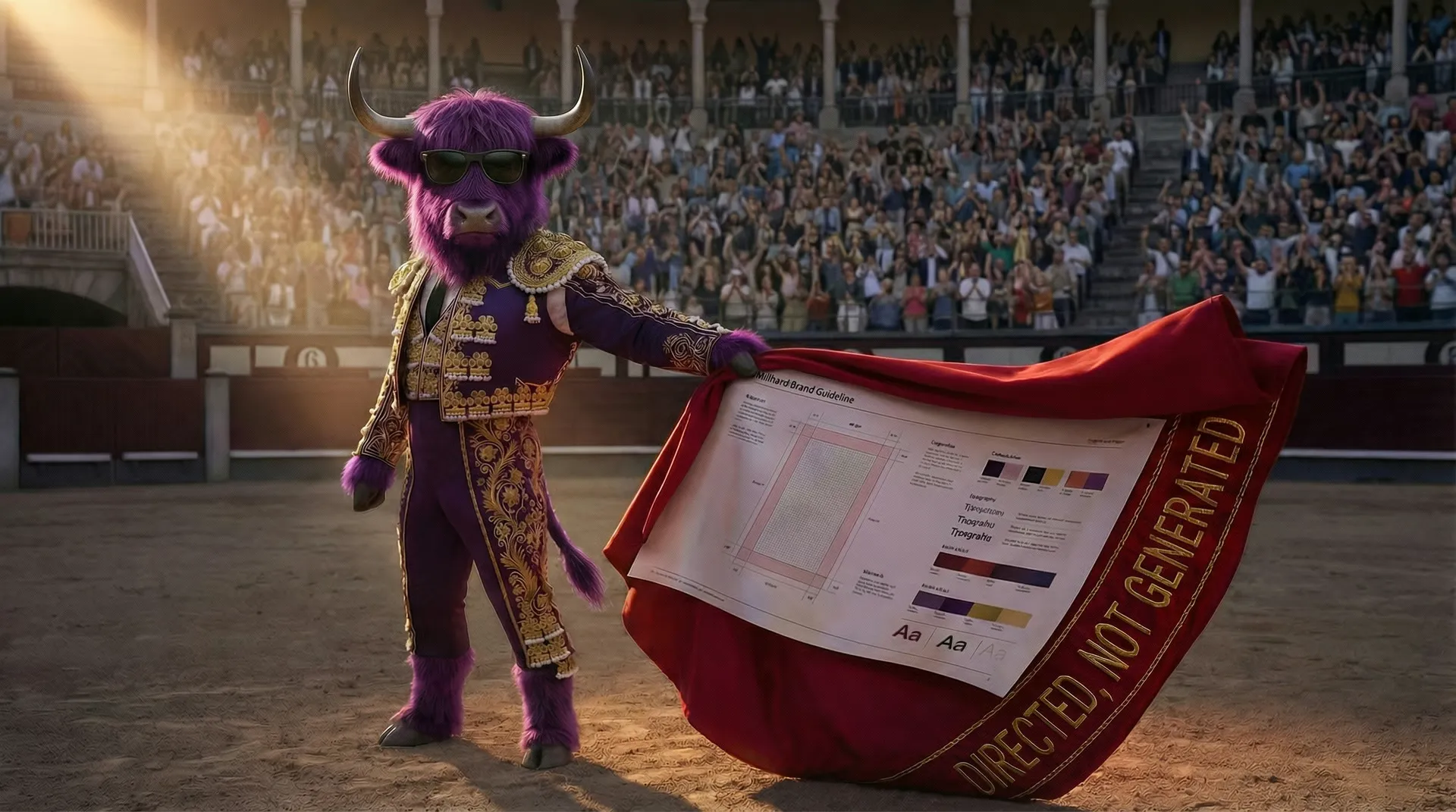
Pixel Juice is a director-led AI video production studio in Sydney. We use AI every day. And the more powerful it gets, the more one truth stays stubbornly the same:
The tool doesn’t make it good. The taste does.
Want to see what directed AI content actually looks like? Watch the work—or start a project and we’ll show you what changes when someone actually directs the machine.
Now that would sell.
Check more blogs
A quick overview of how we work together to make your edit best in class!